The basics
Polyaspartic is a type of aliphatic polyurea. In plain terms, it is a very hard, clear resin that reacts much faster than standard epoxy and does not yellow in sunlight. It can be used as a topcoat over epoxy or as part of a complete system. For homeowners, the big advantage is speed. A floor that might take three days with traditional epoxy can often be done in a single day with polyaspartic, and you can walk on it that evening.
Why it matters in our winters
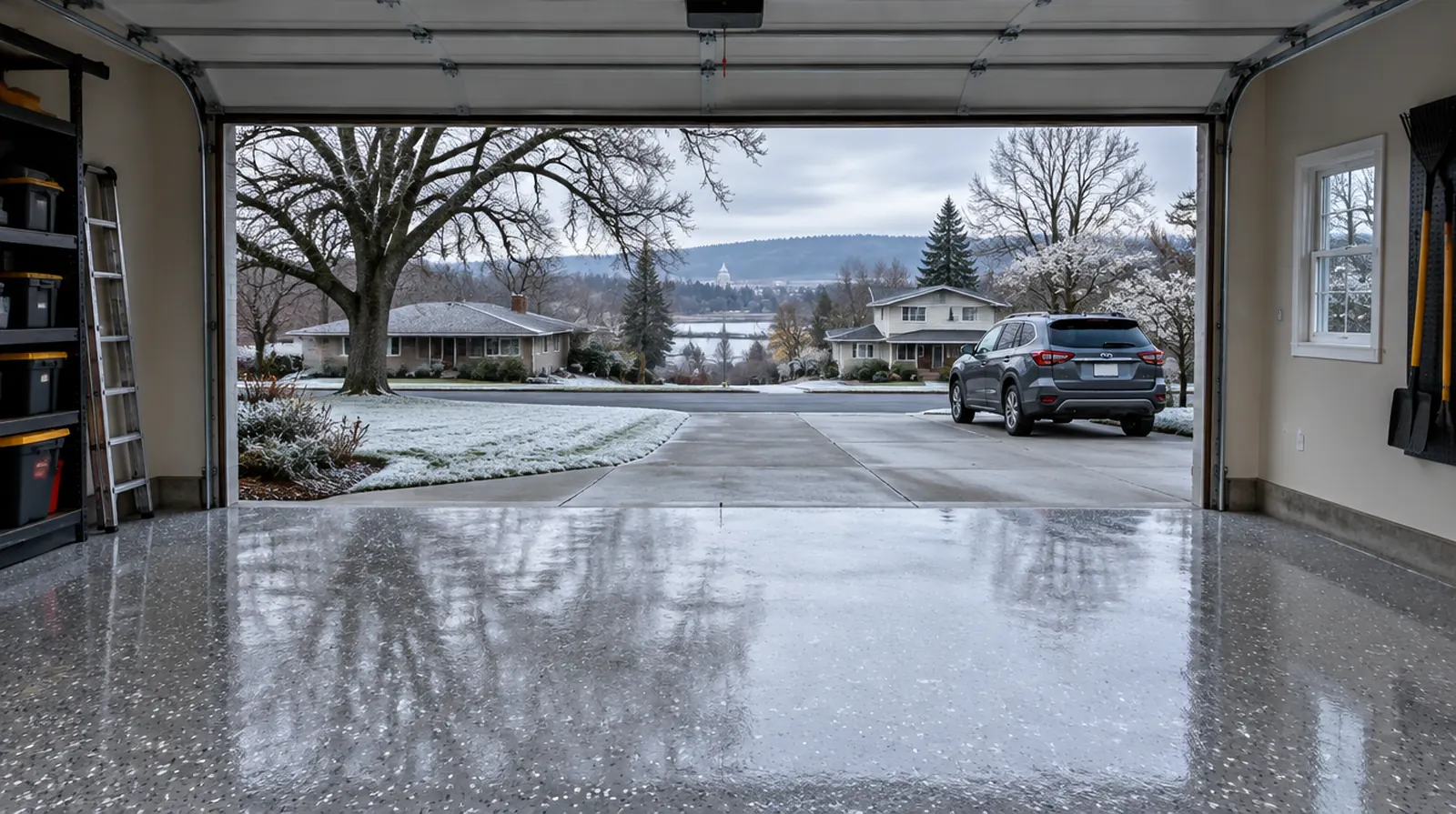
Standard epoxy slows down dramatically when concrete is cold. Below roughly 55 degrees, cure times stretch and the surface can blush, leaving a dull, waxy film. Unheated garages here can sit in the forties for weeks at a time from November through March. Polyaspartic cures well at much lower temperatures, which lets us install quality floors year-round instead of making customers wait for summer. We still measure slab temperature and dew point on every job, but the chemistry gives us much more room to work.
Advantages at a glance
- Speed: foot traffic in hours, vehicles typically in a day or two.
- Cold tolerance: reliable cure in cool garages and shops.
- UV stability: stays clear on porches, patios and garages with the door open.
- Hardness: strong resistance to scratches, hot tires and chemicals.
- Low odor options: suitable for attached garages and occupied buildings.
A skilled install
The speed that makes polyaspartic so convenient also makes it demanding to apply. Once mixed, it begins to gel within minutes. Crews must work in a coordinated rhythm, mixing small batches and keeping a wet edge to avoid lap marks. Surface prep has to be complete before the first batch is mixed, because there is no time to fix problems mid-pour. That is a big reason we do not recommend polyaspartic for do-it-yourself projects.
A typical one-day garage
- Morning: grind, repair cracks and vacuum thoroughly.
- Late morning: primer and pigmented base coat with flake broadcast.
- Afternoon: scrape loose flake, vacuum and apply the clear topcoat.
- Evening: light foot traffic, with vehicles usually returning the next day or two.
Larger repairs, very cold slabs or high moisture readings can extend the job to two days. We will tell you the plan in advance.
Where we use it
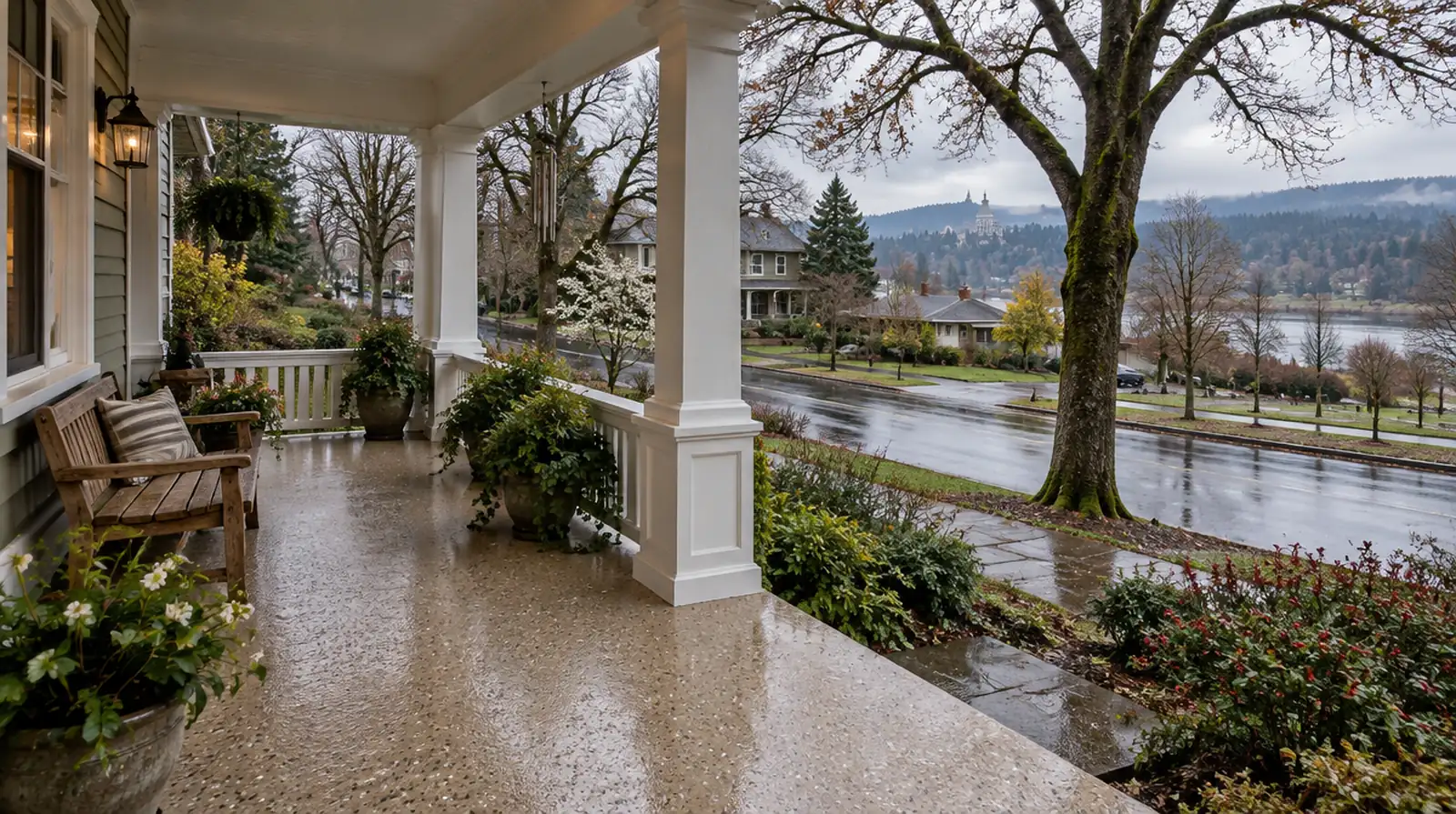
Polyaspartic is our default for residential garages and covered porches. It is also excellent for sunrooms, basements, retail shops, offices, restaurants and other businesses that cannot afford a long closure. On porches and patios that get afternoon sun, its UV stability keeps the floor from yellowing.
Older slabs
On older concrete with moisture or surface wear, we often use a hybrid system: a moisture-tolerant epoxy primer followed by polyaspartic base and topcoats. That combines strong bonding with fast cure and a hard finish.
Cost and value
Polyaspartic materials cost more than standard epoxy, and the install requires an experienced crew. In return you get faster turnaround, cool-weather flexibility, UV stability and a tougher surface. For most garages, the difference in price is modest compared with the extra years of service. Pair it with our garage prep process or ask about a flake blend to finish the look.
Care
Sweep, squeegee and mop with a mild cleaner. Wipe up spills promptly. When the topcoat eventually shows wear, it can be scuff-sanded and recoated.
Questions we hear often
People often ask whether polyaspartic is slippery. A smooth gloss finish can be slick when wet, so we add a fine grit to the topcoat in garages and on porches. Another common question is whether it will yellow. Because it is aliphatic, it stays clear in sunlight, unlike many standard epoxies. Customers also ask how long it lasts. With proper prep and normal residential use, a polyaspartic floor should look good for many years, and the topcoat can be renewed later without starting over.
Our crews carry every material needed to finish a polyaspartic garage in one visit, so there is no waiting between coats. You get a clear schedule, a protected driveway and a tidy cleanup when we leave, and we walk the finished floor with you before we go.
to book a fast-cure floor.
Call (503) 877-1052 for a free estimate.